
Smart Money Concepts (SMC) provides one way to describe price structure and common chart patterns. The vocabulary is useful for analysis, but these interpretations are not direct proof of institutional intentions or guaranteed market forecasts.
Start with the higher-timeframe hypothesis
Review the relevant four-hour and one-hour structure before looking for a lower-timeframe entry. Write down what would make a bullish, bearish or neutral view reasonable. When conditions conflict, staying out is a valid result.
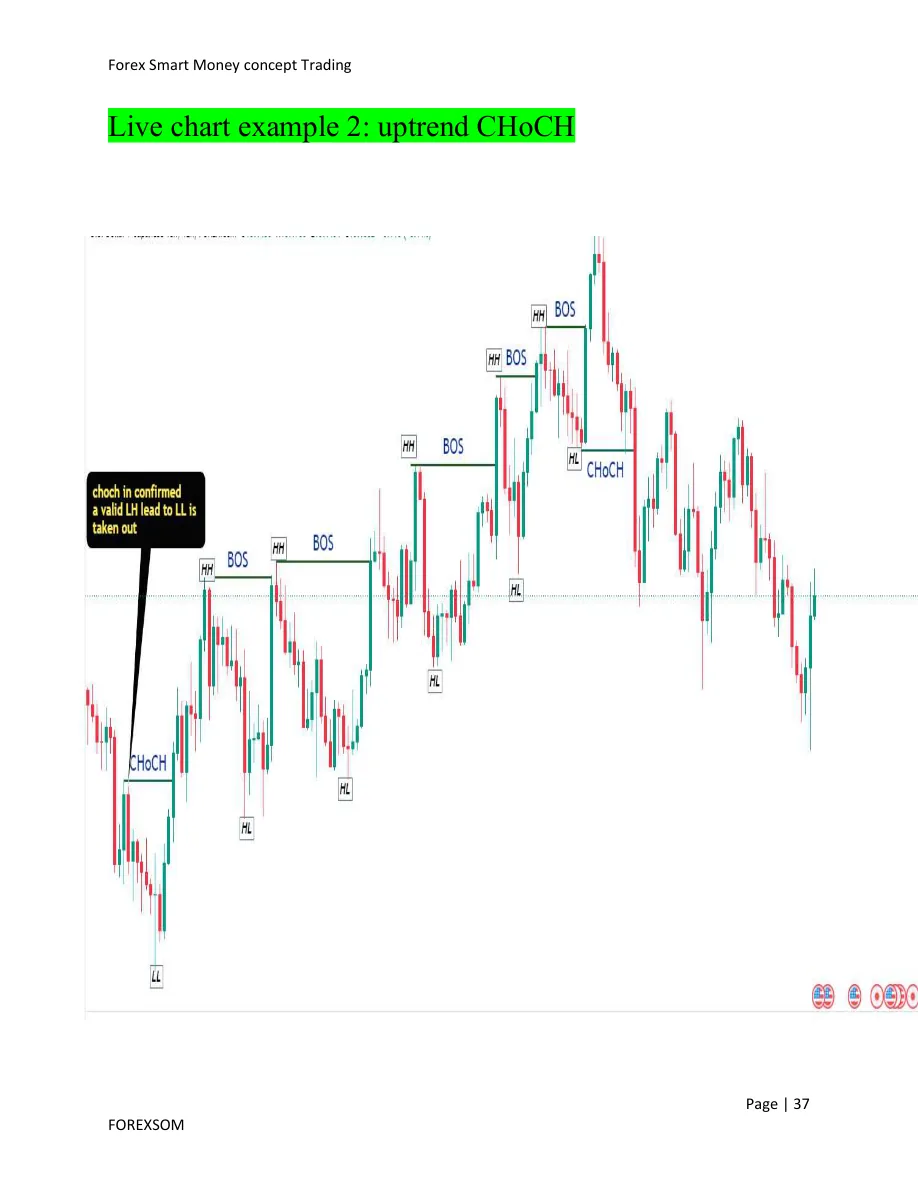
Identify location and liquidity
Mark the prior day high and low and relevant Asia or London session levels if they matter to your method. Note possible supply, demand and order-block areas. Price arriving at a level does not independently justify a trade.
Wait for your defined confirmation
If using a lower timeframe, specify the required change in structure, displacement or other evidence before looking at the chart. Avoid retroactively redefining a valid signal after price has moved.
Predefine risk and when to stop
Determine the invalidation level, position size and maximum permitted exposure before entry. A rule such as taking no more than two trades per day can limit activity, but does not ensure profitability. Leverage, spreads, slippage and major news can change realized losses.
Review the day objectively
Journal the setup, the five conditions, any missing information, and whether the plan was followed. Review no-trades as well as trades. The purpose is a reproducible learning process, not predicting every New York session move.
Make the analysis practical
Use the free five-condition checklist to record direction, location, liquidity, confirmation and risk before considering a trading decision. If a required condition is missing, stand aside.
Open Free Checklist →